



William* could not have been more relieved when he completed his wrist fracture surgery last month. He had broken it during a motorcycle accident and there were concerns at first that he might not ever regain full function. But his orthopedic surgeon insisted that the procedure went perfectly, and that he would be back to his hobby of working on the Camaro he was building from scratch in no time. Even after being showered with good news, William still knew full recovery depended largely on how he handled his rehabilitation. Following his doctor’s strict orders, sticking to his physical therapy schedule, not pushing too fast for his own good, and committing to the treatment plan all mattered now more than ever.
When you’ve had wrist fracture surgery, it is easy to assume that the hard part is over. And, in many ways, you are not wrong. But restoring strength, mobility, and overall wrist function does not happen overnight—even after minimally invasive surgeries. The weeks that follow are just as important, and the choices you make during recovery can have a lasting impact on how well your wrist heals. But what are the do’s and don’ts you should be mindful of?
Our team of surgeons at Fort Worth Hand Center has detailed a few of those tips below, and we promise that each one could mean the difference between a smooth, successful recovery and one filled with unnecessary setbacks.
Wrist Fractures: The Anatomy of the Wrist
Wrist injuries are common and usually the result of a specific event. Maybe you slipped and fell at the grocery store and tore a ligament when you fell forward onto your outstretched hand. Perhaps you fractured your wrist while playing football or in a car accident, or you tweaked it while moving furniture. Your wrist pain could also be because you lifted too heavy at the gym. These are all specific causes you can point to for why you are in pain.
A wrist fracture is different from a common strain or ligament tear in that one or more of the bones in the wrist have been broken. While wrist fractures can also involve sprained ligaments, torn soft tissue, or swelling around the joint, the key difference is that a bone has cracked or broken, either partially, such as a hairline fracture, or completely. In total, there are eight small carpal bones in the wrist. They are arranged in two rows and work together with the forearm bones to provide stability and a wide range of motion.
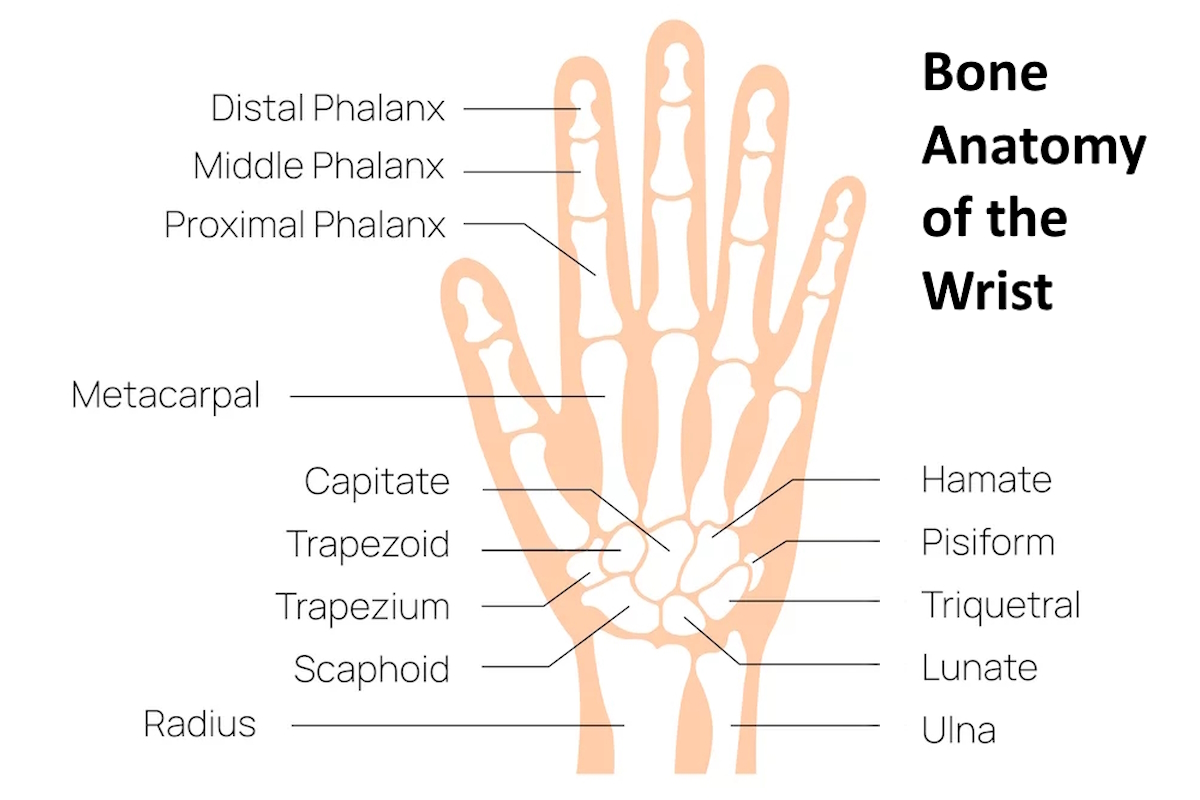
These bones include:
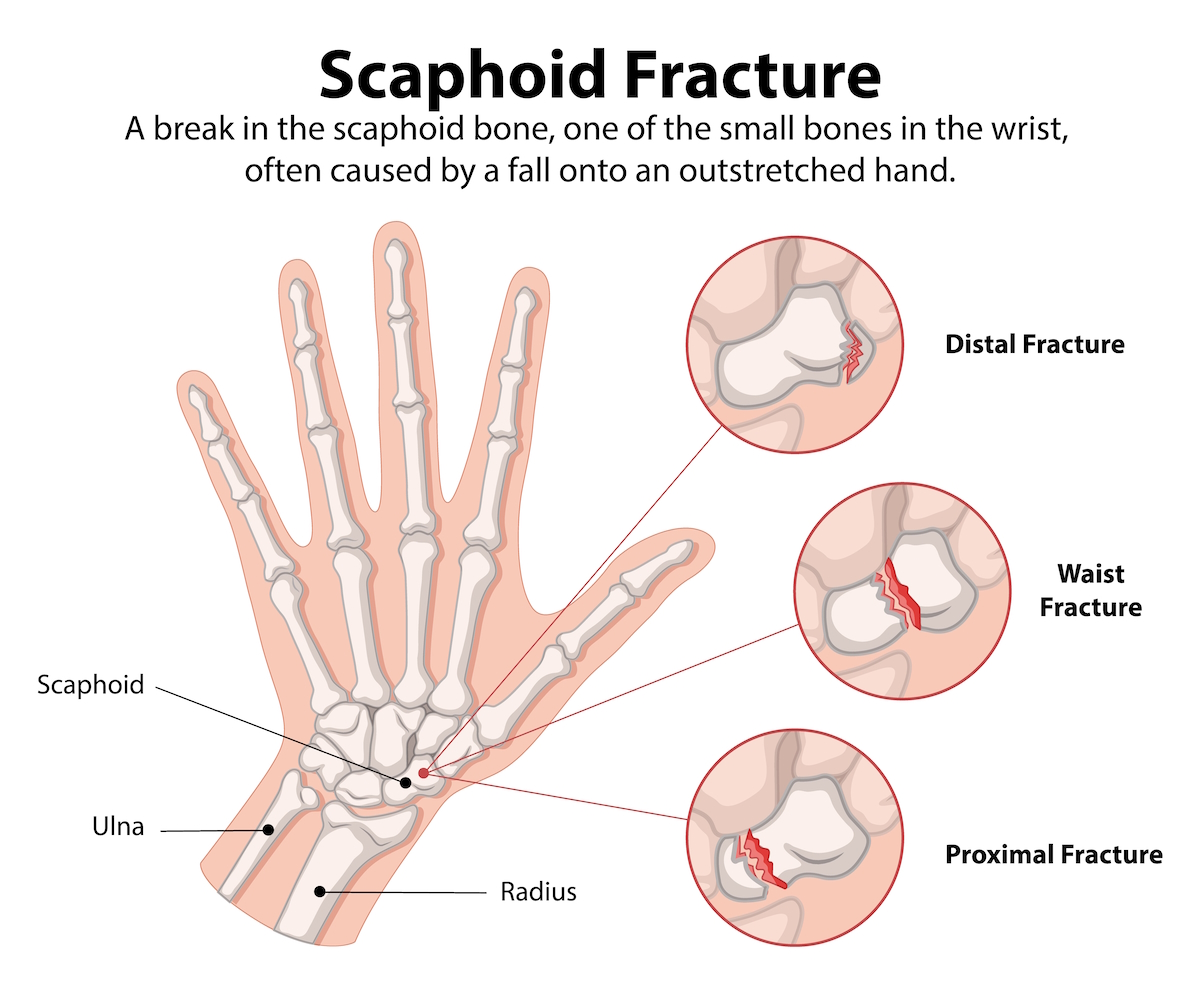
- Scaphoid — Located near the base of the thumb. It is one of the most commonly fractured wrist bones.
- Lunate — In the center of the wrist. It connects the forearm to the hand.
- Triquetrum — Found on the pinky side of the wrist.
- Pisiform — A small, pea-shaped bone that sits on top of the triquetrum on the pinky side.
- Trapezium — Located at the base of the thumb. It is essential for thumb movement and grip.
- Trapezoid — A small bone that connects to the index finger.
- Capitate — The largest carpal bone, positioned in the center of the wrist.
- Hamate — A small, hook-shaped bone found on the pinky side of the wrist.
Together, these bones allow your wrist to bend, rotate, and support everyday movements. Wrist fractures are almost always the result of sudden impact or trauma, and the symptoms are similar to a wrist sprain or strain but more pronounced and usually accompanied by additional symptoms (depending on severity), such as numbness, extreme swelling, bruising, limited range of motion, and obvious deformity.
Do All Wrist Fractures Require Surgery?
No. In fact, many can heal properly with conservative, non-surgical treatments such as casts and splints, along with physical therapy. Surgery might be the best solution, or perhaps necessary, if the broken bone is too unstable or displaced to the point where it is less likely to heal through conservative treatments. In extreme cases where a bone has been shattered, such as in William’s case, surgery could require plates, screws, and wires.
Orthopedic surgeons have several options for wrist fracture surgery, depending on the type and severity.
- Open Reduction and Internal Fixation (ORIF) — As previously mentioned, the surgeon would reposition the severely broken, displaced, or shattered bones and stabilize them with plates, screws, or metal rods.
- Percutaneous Pinning — If there is a fracture where the bones are displaced but can be stabilized without resorting to large surgical incisions, small pins or wires can be inserted through the skin to hold bone fragments in place.
- Bone Grafting — For crushing injuries and wrist fractures where the bone has been lost, tissue from another area of the body is used to repair or strengthen damaged bone.
- Arthroscopic-Assisted Surgery — A minimally invasive approach that uses a tiny camera to help guide the repair of certain fractures. Some of the bones in the wrist are very small and require precise visualization to fix.
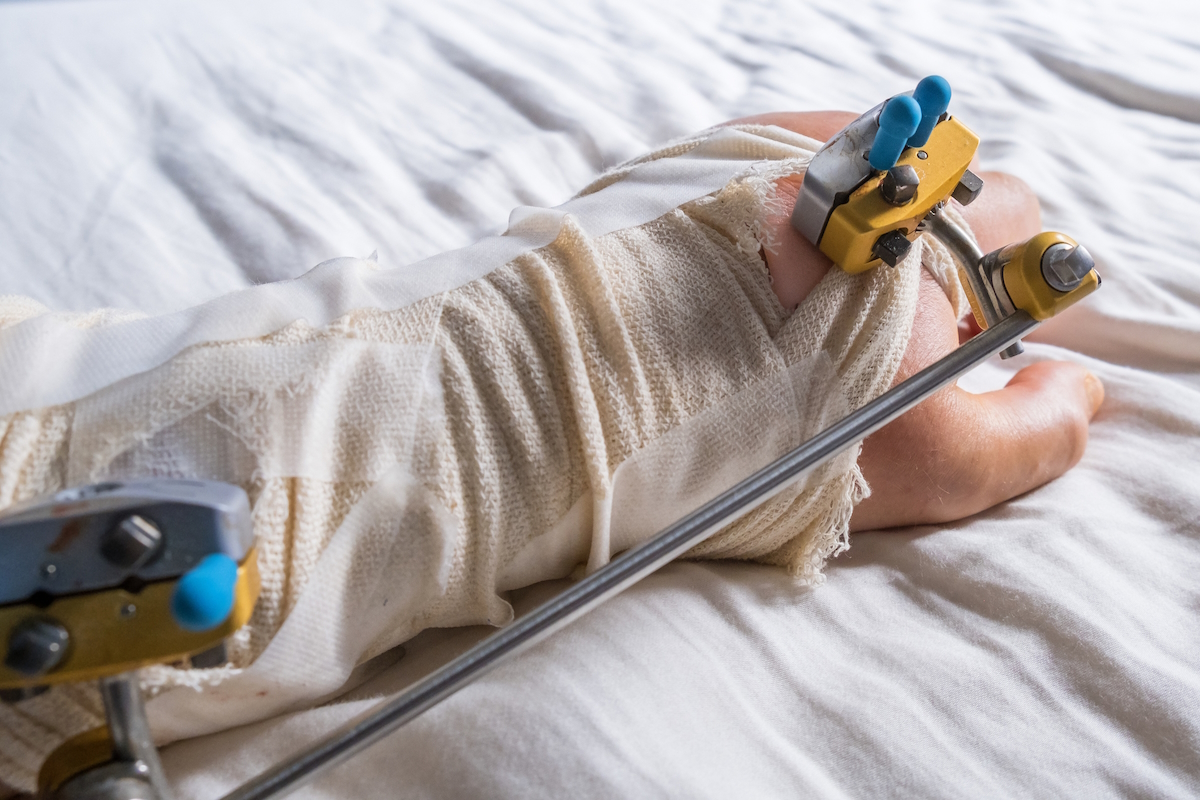
- External Fixation — This procedure is typically used for high-impact injuries, such as car accidents, where the bones require extra stabilization. Doctors would then insert a stabilizing frame outside the wrist. Pins are inserted to hold the frame in place and ensure proper alignment.
What Is the Best Way to Recover From Wrist Fracture Surgery?
Orthopedic surgeons, like ours here at Fort Worth Hand Center, do not choose wrist fracture surgery as a cookie-cutter solution. Generally, we look to more conservative options first and employ a variety of physical therapy exercises for the wrist. Many can be done in the comfort of your own home. But with that said, surgery is often the best option for a variety of musculoskeletal conditions, so that we can get you back on the road to recovery.
How quickly you traverse that road to recovery depends greatly on the do’s and don’ts below:
Do’s for a fractured wrist:
- Listen to your surgeon — Orthopedic surgeons specialize in preventing, diagnosing, and treating injuries and disorders of the bones, joints, ligaments, tendons, cartilage, connective tissues, and muscles. This includes everything from treating acute and traumatic injuries, such as a sprained wrist, to managing chronic pain and diagnosing diseases that can affect your long-term quality of life. Therefore, it is important to listen to their advice. Following wrist fracture surgery, you will be given a set of post-op care instructions and additional notes that are largely catered to your specific injury and surgery type. Follow those directions to the letter of the law.
- Use ice — A good rule of thumb is to ice your wrist for 20-30 minutes every three or four hours, as needed. Ice is widely accepted as a way to reduce surgical inflammation, help with pain, and improve recovery.
- Keep your wrist elevated — Elevating your surgically-repaired wrist above your heart with pillows or blankets while resting, or whenever possible, is another way to reduce swelling and allow the ligaments to heal properly.
- Protect your wrist — If you were given a splint or brace … wear it exactly as instructed. These devices help keep the wrist stable and protect the surgical repair while the bones heal.
- Attend physical therapy — While good old-fashioned rest is important immediately after wrist fracture surgery, doctors will also tell you that, when the time comes, stretching and physical therapy will speed up recovery, improve strength and range of motion, and get you back to doing what you enjoy the most. This process will be guided by professionals who will ensure you move without placing undue stress on the healing bone.
- Report any unusual symptoms or recovery issues immediately — Stay in contact with your orthopedic surgeon and their team. They will want to know how the surgery scars are healing and whether you are experiencing any setbacks, such as excessive pain, swelling, fever, incision drainage, or numbness. Ignoring these symptoms as “normal parts of the recovery process” can lead to significant setbacks in your journey.

Don’ts for a fractured wrist:
- Overdosing on medication — Non-steroidal anti-inflammatory drugs and stronger prescription drugs are sometimes a necessity to keep inflammation low and provide instant relief after a wrist fracture surgery. But they must be taken in moderation and under the doctor’s direction. Too much can lead to unintended side effects. If you feel like the prescription medication is not working, have an open and honest conversation with your doctor first.
- Trying to do too much too soon — When it comes to a fractured wrist, thinking you can “fight through” the pain and get back to work and activities sooner may not be in your best interest. Pushing too hard, sudden movements, and putting too much pressure on an unstable joint can prolong healing.
- Lift anything heavy — Even if you are not using the surgically-repaired wrist directly, lifting, pulling, carrying, etc., adds unnecessary strain on your body and healing wrist. Until your surgeon clears you for normal activity, avoid anything that requires significant grip strength or pressure on the joint.
- Let the incisions get wet — Your surgeon will let you know when it is safe to shower or submerge your wrist in water. Getting the incision wet too early can increase the risk of infection and interfere with proper wound healing.
- Smoke — Smoking and nicotine can slow the body’s ability to heal by restricting blood flow to the injured area. This can delay bone healing and increase the risk of complications after surgery.
- Skip appointments — As stated above, it is important to attend physical therapy and follow-up appointments after wrist fracture surgery. Equally as important is staying consistent with those appointments. Make them a priority—don’t skip them. If you can’t go, at least reschedule it. Post-operative checkups help monitor how well the bone is healing. Skipping these visits could mean missing early signs of complications.

Fort Worth Hand Center Is Your Go-To Specialist for Wrist Fracture Surgery
We use our hands and wrists for so much in everyday life. As a result, it can be very painful, challenging, and frustrating when we lose any of that function because of an injury. This is true when you’ve had wrist fracture surgery. The temptation is to get back to everyday life as quickly as possible. And while we want that for you, too, there is a time and place for everything. Healing is the most important thing.
While recovery requires time, therapy, and patience, many patients experience lasting relief and meaningful functional improvement. Visiting an orthopedic surgeon can open the door to various treatment options to resolve or reduce your symptoms and get you back to living the life you deserve quickly and in the least invasive way possible.
Fort Worth Hand Center surgeons are specialists in treating chronic conditions and traumatic injuries, as well as performing state-of-the-art complex microscopic nerve repairs and tendon transfers. But before any of that happens, our goal is to conduct a thorough examination to determine the best course of action. Sometimes, it may be surgery. Other times, a more conservative approach is better.
If surgery is your best treatment, our orthopedic physicians operate in state-of-the-art, accredited surgery centers. To schedule an appointment, call 817-877-3277 or complete the form below.
"*" indicates required fields
Before starting any new treatment or if you have questions regarding a medical condition, always seek the advice of your doctor or other qualified health provider. This information is not a substitute for professional medical advice.
Fort Worth Hand Center serves the DFW area, including Richland Hills, River Oaks, Saginaw, Sansom Park, Southlake, Trophy Club, Watauga, Westlake, Westover Hills, Westworth Village, White Settlement, Arlington, Azle, Bedford, Benbrook, Blue Mound, Burleson, Colleyville, Crowley, Dallas, Dalworthington Gardens, Edgecliff Village, Euless, Everman, Flower Mound, Forest Hill, Fort Worth, Grand Prairie, Grapevine, Haltom City, Haslet, Hurst, Keller, Kennedale, Lakeside, Lake Worth, Mansfield, Newark, North Richland Hills, Pantego, Pelican Bay, and all of North Texas.
*Patient names and/or photos may be changed to protect patient confidentiality.