



There will likely come a point in everyone’s life when they will experience some form of elbow pain. The how and why behind that pain can vary widely. For instance, it could be something as simple as accidentally banging your elbow against a wall or leaning on it for too long while driving on a long trip. Conversely, elbow pain can spring up after a few intense workout sessions, a sports injury, or too much manual labor in the front yard. Suddenly, everyday tasks—like shaking someone’s hand, straightening your arm, or lifting a coffee mug can feel uncomfortable or downright painful. In most cases, the pain improves with rest, ice, and over-the-counter pain meds. Other times, elbow pain lingers long enough to make us wonder, “Do I need to be worried about this?”
If you are reading this right now, you know how common elbow pain can be—for people of all ages and activity levels. The key is understanding which causes are harmless and temporary and which symptoms may warrant closer review.
Do These Signs of Elbow Pain Sound Familiar?
- Pain or burning in the inner or outer part of the elbow
- Pain on the bony tip of the elbow
- Stiffness and swelling in the elbow
- Reduced range of motion
- Difficulty flexing the wrist toward the forearm
- Tenderness to the touch
- Pain when gripping or lifting an item or when rotating the wrist
- Pain that radiates into the forearm
- General weakness
- Tingling sensations in the arm or hand
- Occasional pain at night
Common Causes of Elbow Pain
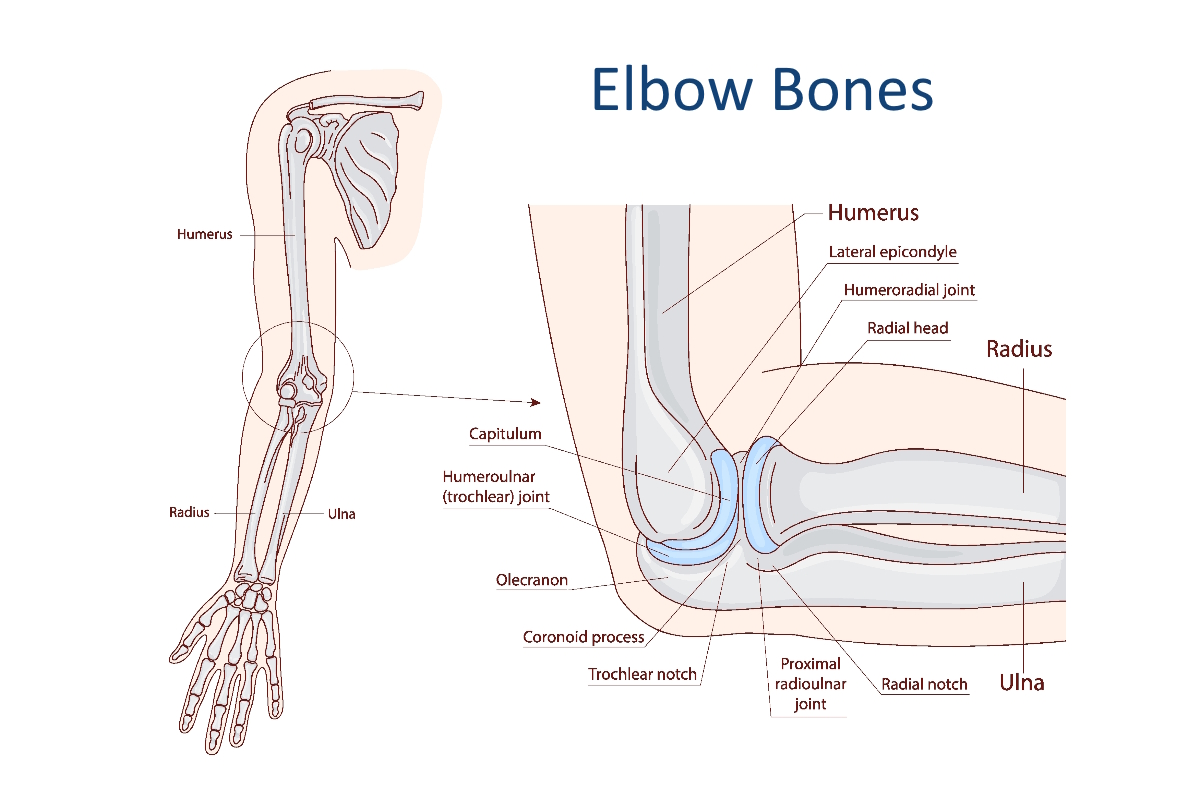
Musculoskeletal pain is the primary reason people visit their doctors each year, and because we use our hands, fingers, arms, and elbows for everything, there are so many ways we can put them at risk. As a result, elbow-related discomfort has long been a common condition affecting 1-3% of the adult population. While that may not sound like a large percentage, it translates to millions of people experiencing elbow pain every year—many of whom are not athletes, laborers, or doing anything particularly extreme.
In fact, elbow pain often develops during routine, everyday activities: working at a computer, carrying groceries, doing yard work, driving for long stretches, or exercising just a bit more than usual.
Since the elbow is a relatively small joint with little natural padding, it is especially sensitive to overuse, pressure, and minor trauma. Understanding the most common causes of elbow pain can help put your symptoms into perspective and make it easier to decide whether what you are feeling is just a minor annoyance—or something worth discussing with a medical professional.
Elbow-related discomfort has long been a common condition affecting 1-3% of the adult population. While that may not sound like a large percentage, it translates to millions of people experiencing elbow pain every year.
Tendinitis
Elbow tendinitis is an overuse injury marked by excess inflammation caused by repetitive use of the wrist and arm. While treatable, the condition can worsen if ignored—limiting your ability to perform daily tasks. There are several common forms of this cause of elbow pain, each impact a slightly different area of the elbow joint.
- Lateral epicondylitis — Also known as tennis elbow this is pain, stiffness, inflammation, or small tears in the tendons that join the forearm muscles on the outside of the elbow. Because your forearm is largely responsible for the stability of your hand, wrist, and fingers, any injury to the area can be extremely painful. Typical causes of this form of elbow pain include constant gripping, repetitive lifting, wrist turning, and similar movements. It can affect athletes just as much as avid computer users, painters, mechanics, and plumbers.
- Medial epicondylitis — Also known as golfer’s elbow, this is another overuse injury of the forearm muscles that impact the inside of the elbow. Many people say they feel pain the most when they are making a fist, bending the wrist, or lifting objects with their palm facing upward. Common triggers might include throwing or swinging motions, heavy lifting, and repeated wrist bending.
- Triceps tendinitis — Believe it or not, but your elbow pain may not be the elbow at all. It may be coming from the triceps muscle. This much larger muscle on the back of your arm has a tendon that connects to your elbow. If the triceps tendon is strained or irritated, it can cause elbow pain. People who experience this most often are weightlifters who perform a lot of pressing and pushing movements.
- Distal biceps tendinitis — Similar to triceps tendinitis, there is a tendon that connects the biceps muscle to the elbow. It is very rare for this to cause elbow pain, but it is worth considering. Pain when bending the elbow, discomfort during lifting or pulling motions, and tenderness near the elbow crease are all common symptoms.

Muscle strain or minor injury
A common thread in this article so far is the risk of injury. Sometimes, elbow pain is simply the result of doing too much, too fast. Muscle strains and minor injuries can occur at any time, including during an intense workout or when lifting awkward or heavy objects. The pain is often localized to a specific area of the elbow joint. It can also be sore to the touch. It may improve with rest over a few days, or it may linger for weeks or months.
Bursitis
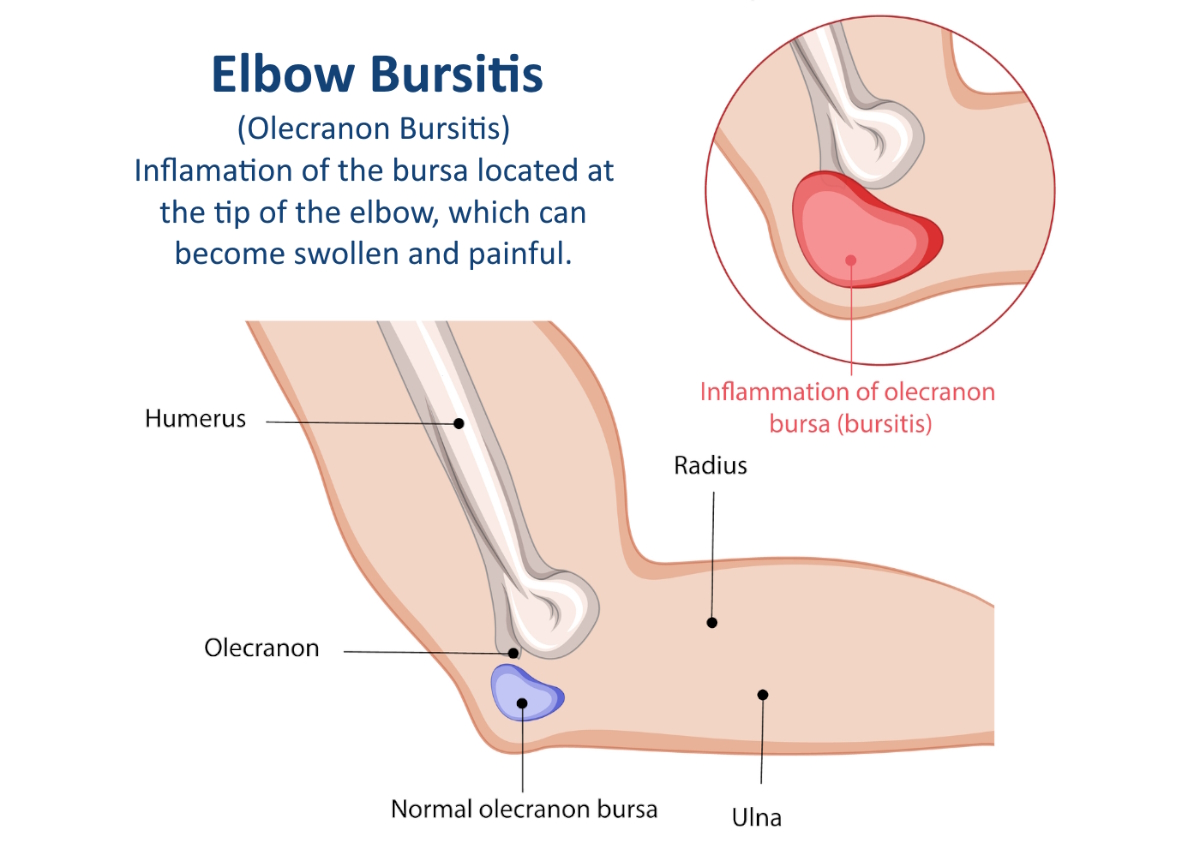
When most people think of the elbow, they typically associate it with the bony bump on the back of the arm. This is known as the olecranon, and it is surrounded or protected by a fluid-filled sac that allows it to glide freely. Essentially, it is a cushion between bones and soft tissues. If that bursa is injured, it can cause pain, swelling, inflammation, and even infection. Elbow bursitis can happen for several reasons:
- A hard blow or impact to the tip of the elbow.
- Prolonged pressure, such as leaning on it against hard surfaces.
- Infection from an insect bite, bacteria, or a puncture wound.
- Certain medical conditions, such as rheumatoid arthritis and gout.
Arthritis
Arthritis affects 60 million adults in the United States. That makes arthritis the nation’s number one cause of disability and one of the more common conditions we see. It can definitely affect the elbow joint. There are many possible reasons you are experiencing it, including normal wear and tear, a specific injury, infections, obesity, family history, or immune system issues. This pain often feels stiff, achy, or worse in the morning or after periods of inactivity. Some people notice reduced range of motion or mild swelling.
Arthritis affects 60 million adults in the United States. That makes arthritis the nation’s number one cause of disability and one of the more common conditions we see. It can definitely affect the elbow joint.
Nerve irritation or compression
If your elbow pain is accompanied by tingling, numbness, or weakness in the hand or fingers, a nerve may be involved. One common example is ulnar nerve irritation, which can cause pain or sensitivity in the inner elbow, tingling in the ring and pinky fingers, and symptoms that worsen with prolonged elbow bending. This type of pain can be aggravated by leaning on the elbows or prolonged desk work.
When Do I Worry About Elbow Pain?
Elbow pain is usually not serious if it improves with rest and you can perform most activities. For instance, no need to worry if you are not losing strength or feeling in the elbow, there’s no significant swelling or redness, and range of motion is intact.
Consider seeing an orthopedic surgeon when:
- Pain lasts longer than a few weeks
- Self-care and rest aren’t doing the trick
- There is still significant swelling, redness, and warmth
- You cannot fully bend or straighten your elbow
- You experience numbness, tingling, or general weakness
- There is a clear sign of infection
Elbow pain rarely requires surgical intervention. In fact, your doctor will likely recommend home remedies first to see if your condition improves. One of the best ways to reduce your risk and avoid putting extra strain on your tendons is to warm up and stretch properly, take ample breaks where possible, use lighter tools or weights, and focus on improving arm mechanics. It’s important to note that recovery time can range from a couple of days to 6 to 12 months, depending on the severity of your situation.

Find Relief for Elbow Pain at Fort Worth Hand Center
Elbow pain is a common condition that almost anyone can experience at some point in their life. The good news is that this condition doesn’t have to be an interruption for the things you love to do or need to do for work. Elbow pain of any kind is treatable, often through conservative means that you can perform at home on your own time. If necessary, your orthopedic surgeon can also recommend surgery if your situation is severe enough. If you want to reclaim your life, take the time to find the right orthopedic surgeon for your unique needs.
Whether you are dealing with a fresh injury or lingering pain that has not gone away, the experienced orthopedic team at Fort Worth Hand Center is here to help. We specialize in accurate diagnoses, personalized treatment plans, and long-term recovery strategies for upper extremity condition and injuries.
From the fingertips to the elbow, the Fort Worth Hand Center physicians treat a wide range of conditions, including sports injuries, joint replacement, chronic conditions, age-related complications, trauma, numbness, and more. Many times, these ailments do not improve on their own and require skilled medical help from someone who truly understands your situation and how muscles, tendons, ligaments, and cartilage function. Our team of orthopedic surgeons at Fort Worth Hand Center is here to help when you need it most.
If surgery is your best treatment, our orthopedic physicians operate in state-of-the-art, accredited surgery centers. To schedule an appointment, call 817-877-3277 or complete the form below.
"*" indicates required fields
Fort Worth Hand Center serves the DFW area, including Mansfield, Newark, North Richland Hills, Pantego, Pelican Bay, Richland Hills, River Oaks, Saginaw, Sansom Park, Southlake, Trophy Club, Watauga, Westlake, Westover Hills, Westworth Village, White Settlement, Arlington, Azle, Bedford, Benbrook, Blue Mound, Burleson, Colleyville, Crowley, Dallas, Dalworthington Gardens, Edgecliff Village, Euless, Everman, Flower Mound, Forest Hill, Fort Worth, Grand Prairie, Grapevine, Haltom City, Haslet, Hurst, Keller, Kennedale, Lakeside, Lake Worth, and all of North Texas.
This information is not a substitute for professional medical advice. Before starting any new treatment or if you have questions regarding a medical condition, always seek the advice of your doctor or other qualified health provider.
*Patient names and/or photos may be changed to protect patient confidentiality.