


- Could What Looks Like a Jammed Finger Actually Be a Tendon Injury?
- What If a Wrist Injury Still Hurts After a “Clean” X-Ray?
- Do Fall Sports Hand Injuries Need Immediate Treatment, and When Can Athletes Return to Play?
- Frequently Asked Questions (FAQs) About Fall Sports Hand Injuries
- Get Your Athlete Back in the Game with Fort Worth Hand Center
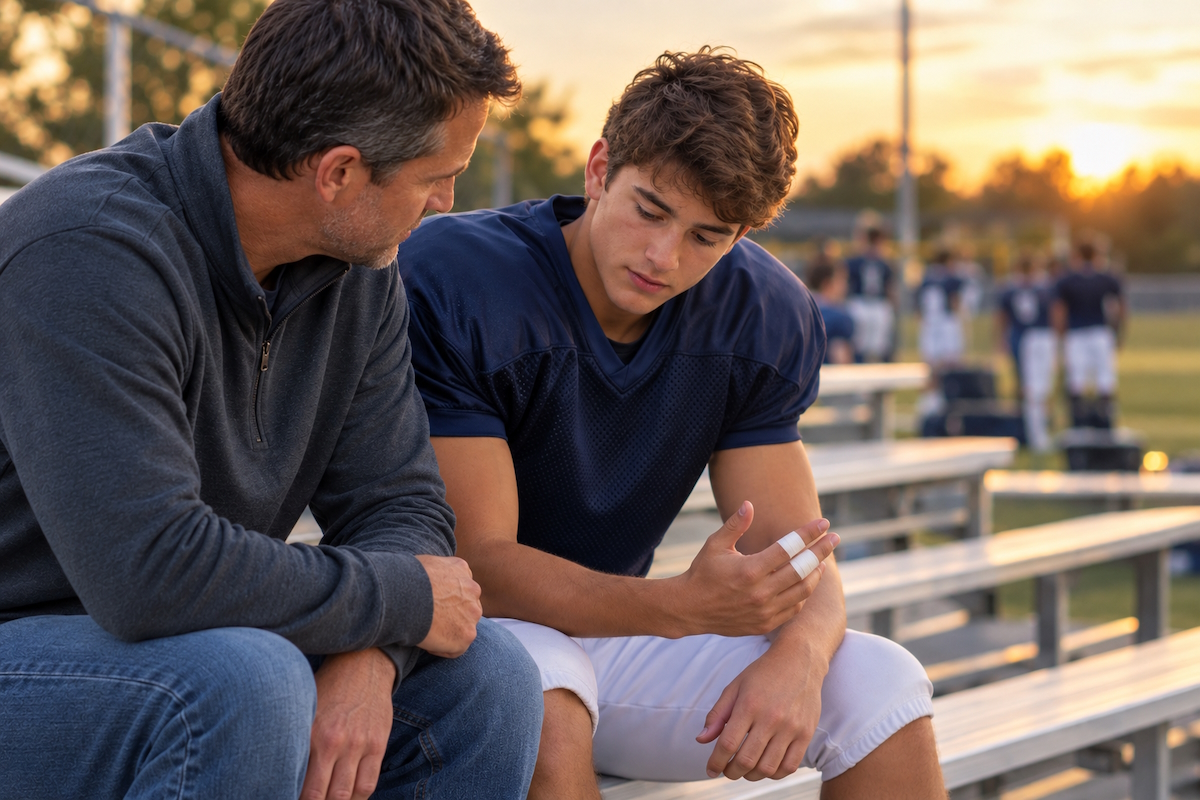
Imagine you are sitting in the stands at your child’s volleyball or football game. Your athlete just made the play of the game, and everyone is celebrating. But as they jog to the sideline, you notice they are holding their hand and wincing. Maybe the ball struck a finger at an awkward angle during a big block at the net. Or maybe, as the parent next to you swears they saw, your teen’s finger got caught in an opponent’s jersey as he made the game-saving tackle. Either way, the team trainer checks the injury, tapes it, and clears your athlete to go back in. Whew—it looks like they dodged a serious hand injury. Or did they? Several days later, your kid is still in pain.
Scenarios like these are every athlete’s and parent’s worst nightmare, and they are not uncommon. Some injuries that look like a routine jammed finger never start moving normally again because they actually involve a damaged tendon—commonly known as mallet finger or jersey finger—and need time-sensitive treatment. Some wrist fractures are also hard to spot during a quick sideline check and may not show up on the first X-ray. That raises the question every sports parent eventually asks: is it time to see a specialist?
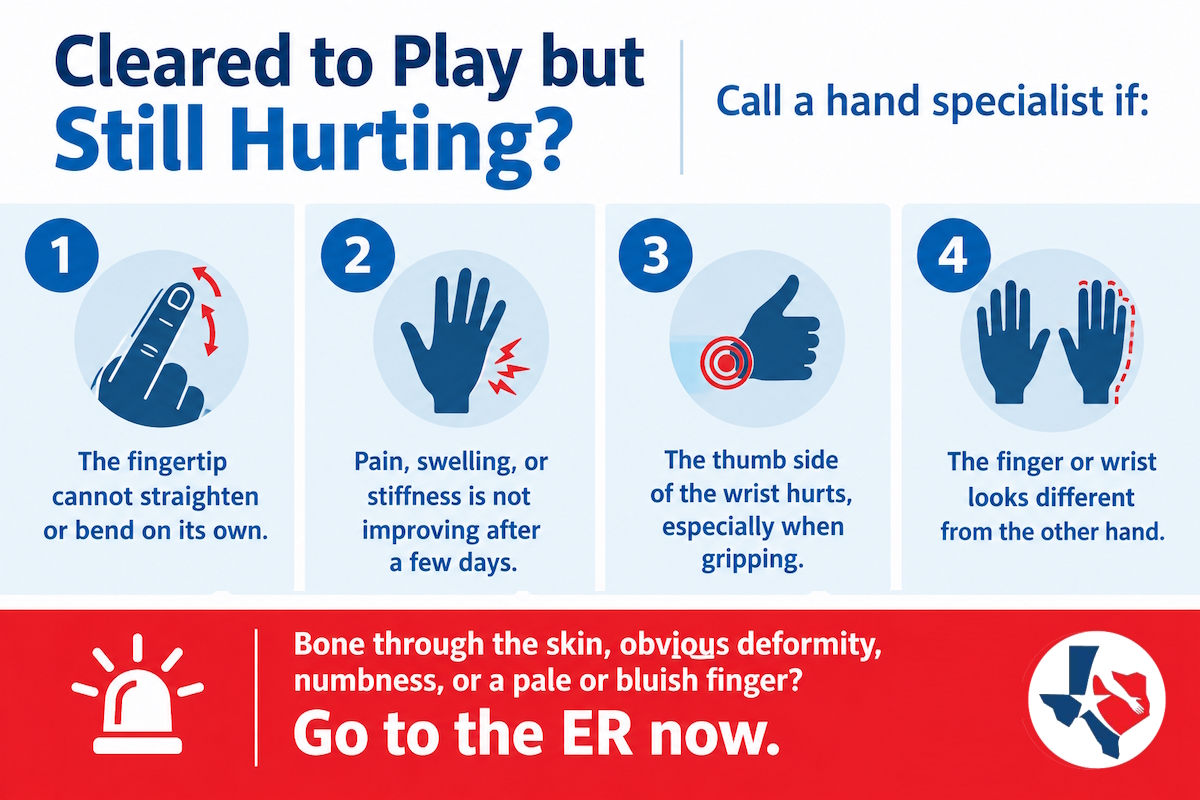
A fall sports hand injury needs a specialist when the tip of a finger cannot bend or straighten on its own, or when finger or wrist pain is not improving after a few days—even if a trainer cleared your athlete to play. These can be signs of a tendon injury such as mallet finger or jersey finger, or a wrist fracture that did not show up on the first X-ray, and some of them are time sensitive.
Could What Looks Like a Jammed Finger Actually Be a Tendon Injury?
Yes. A finger that still cannot fully straighten or bend at the tip after a jam may have a torn or detached tendon rather than a simple sprain. The two most common culprits in fall sports are mallet finger and jersey finger, and both need more than tape and time.
A jammed finger happens when the tip of a finger is forcefully pushed back toward the hand, usually spraining the ligaments around the joint. Jammed fingers happen all the time in fall sports like volleyball, football, cheerleading, basketball, and tennis, and most athletes and parents think they know what to expect: pain, swelling, stiffness, maybe a little bruising, and some trouble moving the finger for a few days. Like many injuries, though, a jammed finger ranges in severity, and the worse it is, the more likely your athlete could be dealing with mallet finger or jersey finger.
Both mallet finger and jersey finger can look and feel almost the same as a jammed finger at first. The key difference is that a tendon has been damaged, and the telltale sign is that the athlete cannot actively straighten or bend the fingertip on their own. Both injuries require treatment beyond taping the finger and returning to play.
What Is Mallet Finger?
Mallet finger is an injury to the thin tendon that straightens the end joint of a finger or thumb. The tendon may tear in the middle, or it may pull away from where it attaches to the bone. In some cases, a small piece of bone pulls away with the tendon. Either way, your athlete can still bend the finger but cannot actively straighten the fingertip, so the tip takes on a drooping appearance.
Mallet finger is often called baseball finger, but it happens in fall sports, too. Here are four possible scenarios:
- Basketball — A player goes up for a rebound, and the ball hits his fingertip hard. It is ruled a jammed finger on the sideline, and he finishes the game. Later, he realizes he can bend the finger but cannot straighten the last joint.
- Cheerleading — A base reaches up to catch a flyer coming down from a stunt, and the flyer’s foot strikes the tip of her extended finger, bending it down. She finishes the routine, but the fingertip now droops, and she cannot straighten it on her own.
- Football — A receiver reaches for a pass, and the ball jams into the end of his outstretched finger, bending the tip down. Afterward, the fingertip droops, and he cannot straighten it.
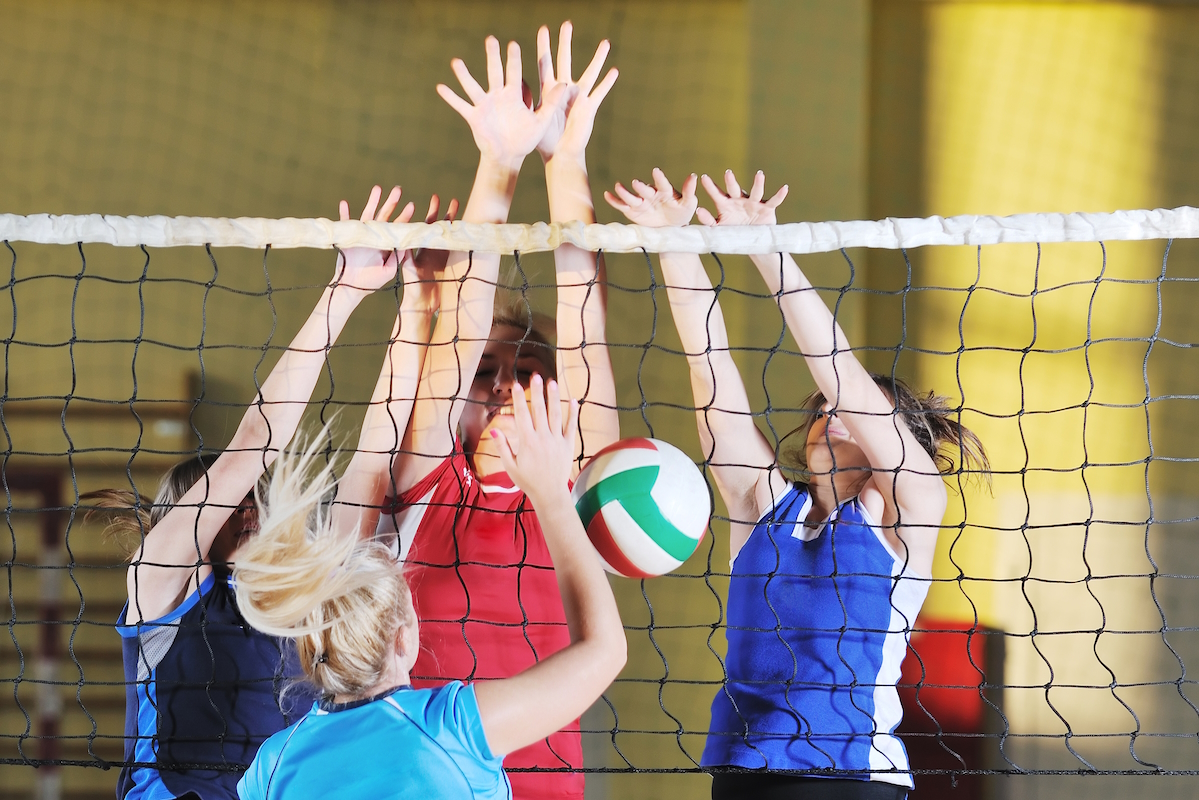
- Volleyball — A blocked ball at the net catches the tip of a player’s finger and forces it sharply downward. She shakes off the pain but later notices she cannot fully straighten the fingertip.
Signs of mallet finger include:
- Pain and swelling in the injured finger
- A noticeable droop at the tip of the finger
- Inability to straighten the fingertip unless you push it up with your other hand
- Bruising and redness at the injury site
- A detached fingernail, in some cases
What Is Jersey Finger?
Jersey finger happens when a bent finger is suddenly and forcefully straightened while the tendon on the palm side is working to keep it bent. The classic example is a football player whose finger catches in an opponent’s jersey during a tackle or block. It can also happen in volleyball or basketball—for instance, when the ball strikes a fingertip just as the hand closes around it. The force tears the tendon or pulls it away from the bone, so the athlete can no longer bend the tip of the finger on their own.
“The ring finger is the weakest finger and accounts for 75 percent of jersey finger cases.”
— American Family Physician
The key distinction between the two injuries is simple:
At a Glance: Mallet Finger vs. Jersey Finger
• Mallet finger — The athlete cannot actively straighten the fingertip. It is usually treated with a splint that keeps the fingertip straight for at least six to eight weeks.
• Jersey finger — The athlete cannot actively bend the fingertip. It typically needs surgical repair by a hand surgeon, and the sooner it is treated, the better.
What If a Wrist Injury Still Hurts After a “Clean” X-Ray?
A wrist that still hurts several days after a normal X-ray needs a second look. Some fractures, especially of the scaphoid bone, do not show up on the first X-ray, and a hand specialist may order an MRI or CT scan to find them.

Wrist injuries are extremely common in fall sports. A quarterback gets sacked and lands on an outstretched hand. A volleyball player dives for a last-ditch dig and lands awkwardly on her wrist. A cheerleader catches a stunt at an awkward angle. A basketball player reaches for a loose ball, and another player strikes the back of the hand, bending the wrist sharply. In each case, the pain may not seem bad enough to stop play, and a sideline check or post-game X-ray may even look fine. But several days later, the wrist still hurts.
A normal X-ray does not always rule out a wrist fracture. Many parents assume a broken wrist always comes with an obvious deformity or a snapping sound, but that is not always the case. Certain fractures, such as a scaphoid fracture, can be hard to see on the first X-ray and may need an MRI or CT scan to confirm.
The scaphoid is one of the small bones on the thumb side of the wrist, and it is especially vulnerable when an athlete falls on an outstretched hand. Cleveland Clinic counts scaphoid fractures among the most common broken bones. For younger athletes, growth plates add another layer of complexity; our guide to pediatric hand fractures explains why.
“Some scaphoid fractures don’t show up well (or at all) on X-rays.”
— Cleveland Clinic
Even if an X-ray looks clear, these symptoms deserve a closer look:
- Persistent pain on the thumb side of the wrist
- Tenderness and swelling
- Reduced range of motion
- Pain that limits gripping or using the hand
The takeaway for parents: If your child’s finger still does not move normally after a sports injury—especially if the fingertip cannot actively bend or straighten—do not assume it is simply a jammed finger that needs more time. The same is true for a wrist injury that is not improving or is getting worse.
Do Fall Sports Hand Injuries Need Immediate Treatment, and When Can Athletes Return to Play?
Not every hand injury needs surgery, but some are time-sensitive, so it is best to see a specialist sooner rather than later. Return to play depends on the injury: mallet finger usually means at least six to eight weeks in a splint, while athletes who have jersey finger treated promptly can often return to sports in about eight to 12 weeks.
Mallet finger and jersey finger are not treated like a typical jammed finger, and a possible wrist fracture is not treated like a simple sprain. A hand specialist can determine whether the injury involves a tendon, ligament, bone, or another structure that may not be obvious during a sideline evaluation.
Mallet finger
According to American Family Physician, conservative treatment can still succeed up to three months after the injury, even when care is delayed. Still, it is better to seek care sooner—Fort Worth Hand Center recommends treatment within a week—because untreated mallet finger may become permanent and can lead to a swan neck deformity, in which nearby finger joints are pulled out of alignment. Treatment usually means keeping the fingertip straight in a splint day and night for at least six to eight weeks. Because the splinting period starts over any time the fingertip is allowed to bend, athletes need to keep the splint on exactly as directed.
Jersey finger
Jersey finger is more time sensitive. According to StatPearls, surgery within 10 days of the injury is associated with excellent patient-reported outcomes. Once more than three months have passed, the injury is considered chronic, and repair becomes far more complicated, sometimes requiring a two-stage tendon graft. With prompt treatment, athletes can often return to sports in approximately eight to 12 weeks, once they have full, pain-free motion, although actual recovery depends on the individual injury and treatment.
Wrist fractures
If a wrist fracture is suspected but does not appear on the first X-ray, a hand specialist may recommend additional imaging, such as an MRI or CT scan. Cleveland Clinic notes that recovery from a scaphoid fracture typically takes about three months, though it can be shorter or longer depending on where the bone broke and whether the pieces shifted out of place.
The bottom line is that there is no single return-to-play timeline for every hand or wrist injury. Some athletes can keep playing with the right splint or protection while the injury heals. Others are better off staying on the sideline until it heals—especially if surgery is recommended. Your athlete’s hand surgeon will help you weigh those options.

Frequently Asked Questions (FAQs) About Fall Sports Hand Injuries
Get Your Athlete Back in the Game with Fort Worth Hand Center
Finger and wrist injuries—including jammed fingers, mallet finger, jersey finger, and wrist fractures—are common in fall sports, but they do not have to keep young athletes on the sideline for long. Many are treatable with splinting and other conservative care. When an injury is more severe, surgery may be the best way to restore full function. The key is getting the right diagnosis early.
Fort Worth Hand Center sees athletes referred by trainers and physicians across Fort Worth ISD, Keller ISD, Northwest ISD, TCU and other local colleges, as well as area club programs, with families coming from Southlake and Colleyville to Mansfield and Burleson. Our orthopedic hand surgeons start with a thorough exam to determine the best course of action. Sometimes, that is surgery. Other times, a more conservative approach is better. And before next season, take a few minutes with our 7 ways to prevent wrist and hand injuries in youth sports and tips to prevent wrist, finger, and hand sports injuries.
From fingertips to elbows, Fort Worth Hand Center offers expert diagnosis of injuries, chronic conditions, and degenerative diseases. If surgery is your best treatment option, our orthopedic physicians operate at state-of-the-art, accredited surgery centers.
To schedule an appointment, call 817-877-3277 or complete the form below.
"*" indicates required fields
Before starting any new treatment or if you have questions regarding a medical condition, always seek the advice of your doctor or other qualified health provider. This information is not a substitute for professional medical advice.
Fort Worth Hand Center serves the DFW area, including Mansfield, Newark, North Richland Hills, Pantego, Pelican Bay, Richland Hills, River Oaks, Saginaw, Sansom Park, Southlake, Trophy Club, Watauga, Westlake, Westover Hills, Westworth Village, White Settlement, Arlington, Azle, Bedford, Benbrook, Blue Mound, Burleson, Colleyville, Crowley, Dallas, Dalworthington Gardens, Edgecliff Village, Euless, Everman, Flower Mound, Forest Hill, Fort Worth, Grand Prairie, Grapevine, Haltom City, Haslet, Hurst, Keller, Kennedale, Lakeside, Lake Worth, and all of North Texas.
*Patient names and/or photos may be changed to protect patient confidentiality.